BUENOS AIRES, May 2, 2025 (Reuters) — A congressional committee approved President Javier Milei's bill to partially privatize YPF, Argentina's state-controlled oil giant, on Wednesday, sending the company's American Depositary Receipts up 7% on the New York Stock Exchange and reigniting one of Argentina's most politically explosive debates over the proper role of the state in the economy.
The Energy Committee voted 14-9 along party lines to advance the bill, which would reduce the state's stake in YPF from 51% to 25% through a public share offering on the Buenos Aires and New York exchanges. The government projects the sale could raise $3-4 billion, with proceeds earmarked for debt reduction and Vaca Muerta infrastructure investment including pipelines and processing facilities that are bottlenecks for shale production.
"YPF was stolen from its shareholders once before," Milei said at a rally following the vote in Neuquén, referencing the 2012 renationalization from Spain's Repsol that cost Argentina $5 billion in compensation and poisoned investor sentiment for a decade. "Now we're going to give it back to the market, where it belongs. The era of state oil companies is over."
YPF's NYSE-listed ADRs (YPF) closed at $31.45, the highest level since 2018 and up 142% since Milei's inauguration. Trading volume exceeded 8 million shares, triple the 30-day average. The company's Buenos Aires-listed shares (YPFD.BA) rose 6.2% on heavy volume.
The privatization plan has divided Argentine politics along familiar lines. Business groups and energy analysts have welcomed the move as essential to attracting the $15-20 billion in investment needed to fully develop Vaca Muerta, one of the world's largest shale formations, which holds an estimated 16 billion barrels of recoverable oil equivalent.
Energy analysts said YPF under state control has been a jobs program for political appointees, not an energy company. Private capital will demand efficiency and transparency that the state never enforced. Vaca Muerta needs international oil companies, not party bosses.
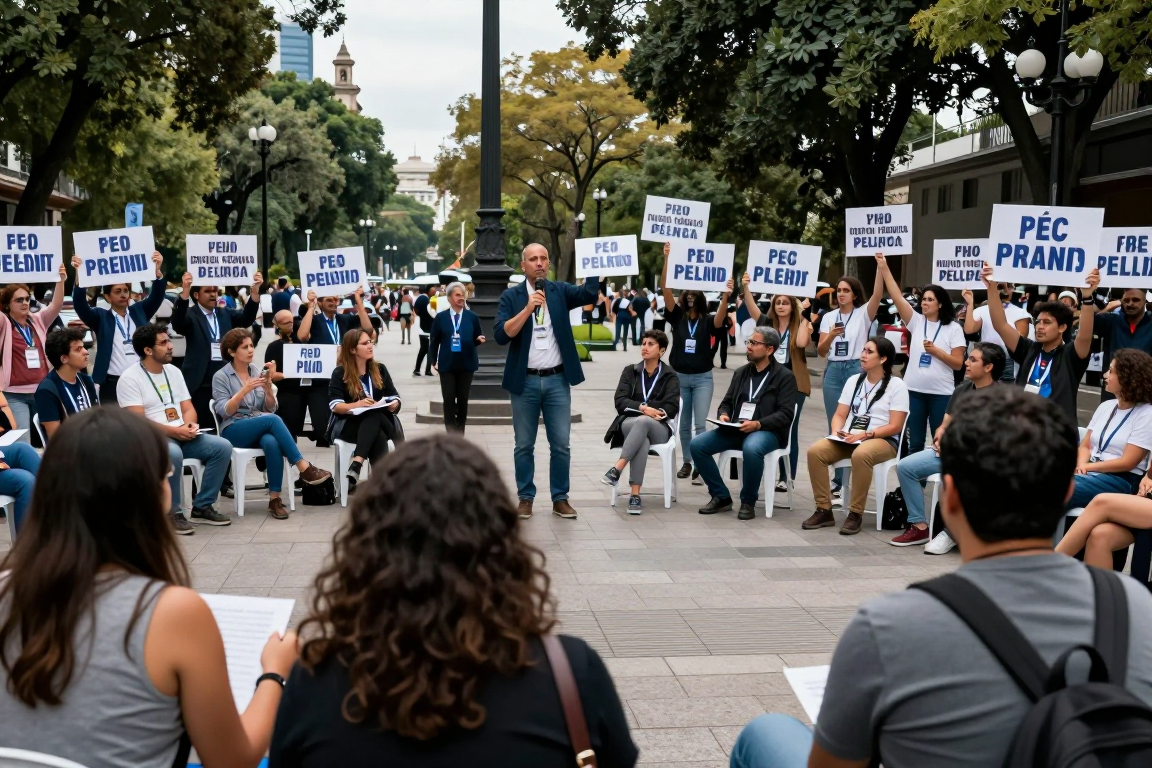
Opposition parties and labor unions have vowed to block the bill on the floor, where Milei's coalition lacks a majority. The CGT announced a 24-hour strike for May 10, and Peronist deputies filed a constitutional challenge arguing that privatizing a strategic energy asset requires a two-thirds legislative majority under the Hydrocarbons Law.
Public opinion is split. A Management & Fit poll found that 51% of Argentines oppose YPF privatization, while 42% support it. Among voters under 35, support runs at 58%, suggesting a generational divide that Milei is counting on to carry him through October's elections.
The bill now moves to the full Chamber of Deputies, where a vote is expected by mid-May. Even if it passes the lower house, Senate passage remains unlikely before October's midterms. Milei would need to secure support from at least 15 opposition senators, a tall order given the bill's polarizing nature.
Opposition senators said they would not let Milei sell Argentina's energy future to the highest bidder, calling YPF a strategic national asset that belongs to the Argentine people.